If you’ve been keeping an eye on the worlds of finance and technology, you might have noticed a buzzword popping up more often lately: asset tokenization. It might sound like something out of a sci-fi movie, but it’s already here—and it’s going to change the way we own, buy, sell, and even inherit property.
And yes, that means it could also change the way you plan your estate.
So, What’s Asset Tokenization Anyway?
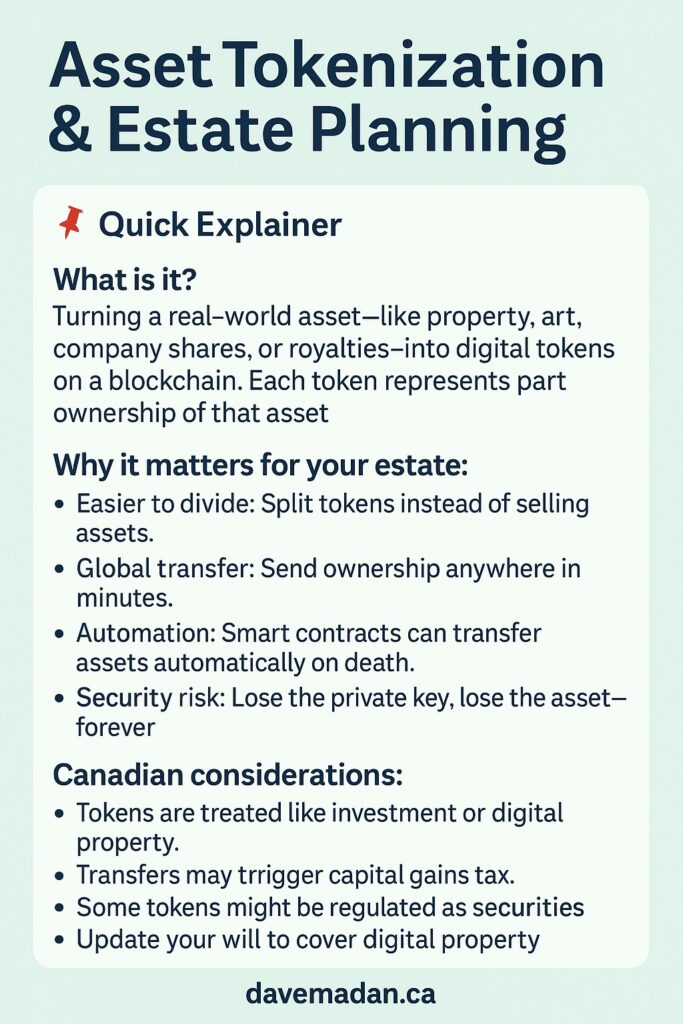
Imagine taking a high-value asset—a condo in Toronto, a painting, company shares, even music royalties—and turning it into digital tokens stored on a secure blockchain.
Each token represents a slice of ownership in that asset.
- That Toronto condo? It could be divided into 1,000 tokens, each one representing 0.1% ownership.
- A music catalogue? Tokens could automatically pay out royalties to whoever owns them.
- Private company shares? Tokens could make them easier to transfer without a mountain of paperwork.
In other words, tokenization is about making ownership more flexible, more transparent, and in many cases, easier to trade.
Why Should You Care About This for Estate Planning?
Here’s where it gets interesting for anyone thinking about their will, their heirs, or their legacy: tokenized assets behave differently than traditional ones. That means your estate plan might need an upgrade.
Easier Splitting Among Heirs
You don’t have to sell the condo to divide it among three children—just split the tokens.
Cross-Border Simplicity
Got beneficiaries in different countries? Tokens can be transferred anywhere in minutes. But here’s the catch: taxes and regulations still apply, and they can get complicated fast.
Automation Through Smart Contracts
Some tokens use “smart contracts” that can automatically transfer ownership when certain conditions are met—like the registered owner’s passing. This could speed things up, but it also raises legal questions about control and oversight.
Security Risks You Can’t Ignore
Lose the private key to your tokens (basically the password), and they’re gone forever. No probate court can bring them back. That makes secure storage and clear instructions for your executor absolutely critical.
The Canadian Context
Right now, Canada doesn’t have a separate legal category for tokenized assets—they’re treated like other digital or investment property. That means:
- They still have to be listed in your estate inventory.
- Transfers could trigger capital gains tax, even if the underlying asset isn’t sold.
- Some tokenized assets may be considered securities, meaning provincial regulations could apply.
In short, the law is still catching up—but that doesn’t mean you should wait to plan.
How to Future-Proof Your Estate Plan
You don’t need to be a tech expert to prepare for tokenized assets. Here’s what you can do now:
- Keep a Digital Asset Inventory — List any tokens, crypto, or online accounts, along with where they’re stored.
- Secure Your Private Keys — Use a password manager, encrypted storage, or a trusted custodian.
- Update Your Will — Make sure it includes instructions for digital assets, including who gets them and how to access them.
- Think About a Trust — Trusts can manage digital assets for beneficiaries who might not be ready to handle them.
- Work With Professionals Who Understand This Space — Not all lawyers or advisors are up to speed on tokenized assets—find one who is.
The Bottom Line
By 2030, tokenized assets could represent trillions of dollars globally. Whether it’s property, investments, or something entirely new, there’s a good chance future inheritances will include digital tokens alongside more traditional wealth.
The question is—will your estate plan be ready?