Patrick Stewart, the right to choose, and the orders you have to give early
Captain Jean-Luc Picard almost never flew the Enterprise himself. He gave orders. “Make it so” was the whole job: decide, say it aloud, and trust the crew to carry it out. The authority came with the chair, and it only worked while he was sitting in it.
Sir Patrick Stewart died on October 28 at his home in Los Angeles, at 86, in the care of his wife, Sunny Ozell. His family described his final illness as a “brief and poignant journey” with Alzheimer’s disease and Lewy body dementia. To millions he was Picard and Professor X. To a smaller audience he was something else: one of the most visible campaigners in the English-speaking world for the right to choose how you die.
That combination is why his death deserves an estate planner’s attention. Not because of anything that happened in his final months, which belongs to his family and is largely unknown, but because of a gap his own advocacy circled for more than a decade. Every law he fought for assumes the captain is still on the bridge.
The Campaigner
He came to the cause through a friend. In a 2014 essay for the Mail on Sunday, Stewart wrote about David Pinder, a friend from his hometown of Mirfield, whose partner Gillian was dying of cancer at 53 and ended her own life alone. Stewart’s argument was simple and furious: she should have been able to make that choice openly, with the person she loved beside her, rather than in secret.
He became a patron of Dignity in Dying, spoke to MPs at Westminster and to the campaign in Scotland, and in the same essay disclosed something practitioners will recognize. He had already signed a living will directing his doctors to withhold treatment in certain circumstances, and he said he would have added an assisted death to it if the law allowed. He described planning for death as “simply another aspect of planning for life.”
That is an unusually well-prepared position for a man in his seventies. Which is exactly what makes the rest of the story instructive.
The Capacity Trap
The campaign Stewart lent his name to was always for terminally ill, mentally competent adults. The bill for England and Wales that passed the House of Commons in June 2025 required full mental capacity and a clear, settled wish at the time of the request. It then ran out of time in the House of Lords on April 24, 2026, six months before he died. California, where he lived, has had an assisted dying law for a decade, and it too requires capacity when the choice is made.
Alzheimer’s disease and Lewy body dementia take away precisely that. Lewy body dementia is especially cruel to the paperwork, because capacity can come and go from one day to the next, and no one can be sure which day they are dealing with.
To be clear about the facts: there is no evidence that assisted dying played any part in Stewart’s death, and nothing here is a guess about what he would have chosen. The point is structural. A right that can only be exercised by a competent person is a right that dementia revokes quietly, without a hearing, often before anyone notices it has happened.
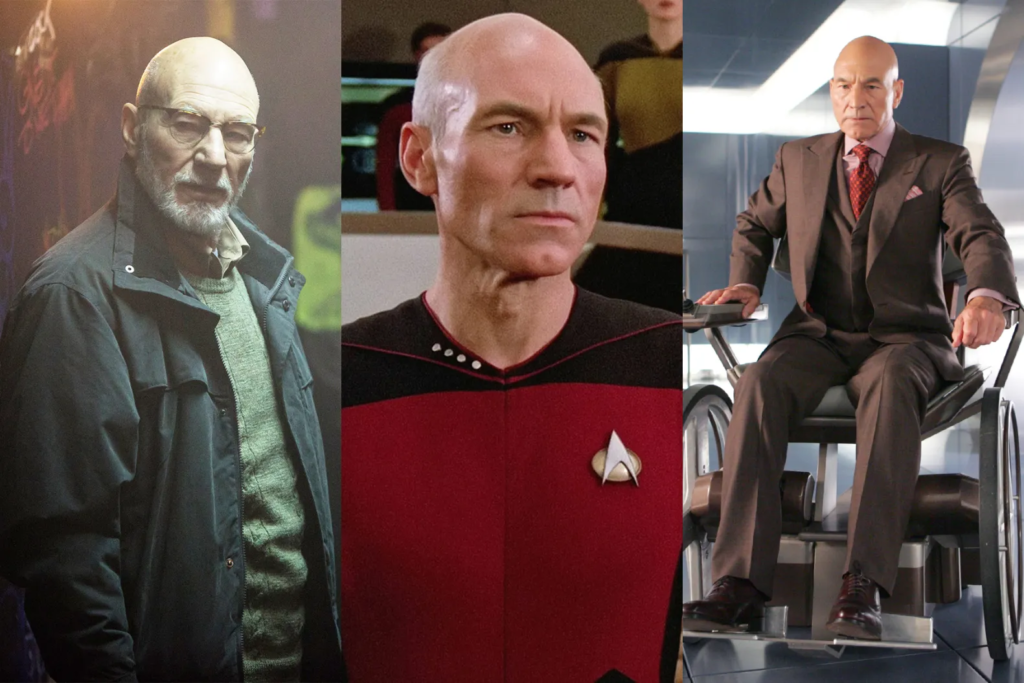
Picard had already played this scene. In “All Good Things…”, the final episode of The Next Generation, an elderly Picard lives with a fictional degenerative brain condition and spends the episode trying to persuade former crewmates who have started, gently, to humour him. He was right, as it turned out. But being right is not the same thing as being believed, and a person whose capacity is in doubt rarely gets to settle the question themselves.
Logan Had No Paperwork
If Picard is the plan, Charles Xavier in Logan is what life looks like without one.
The film finds the most powerful mind on Earth in his nineties, failing from a degenerative brain disease that triggers seizures he cannot control. He is hidden in an abandoned smelting plant across the Mexican border, cared for by Logan and Caliban, who buy his medication, manage his doses, and absorb the danger. It is, almost beat for beat, a portrait of dementia caregiving, with the adamantium removed.
What no one in that film has is authority. Logan has devotion, and devotion is not a legal status. In the real world, the first bank, physician or care facility that asks “on what authority?” stops the caregiver cold. Without an enduring power of attorney and a personal directive, the answer in Alberta is a court application to be appointed as guardian or trustee, which costs time and money at the very moment a family has the least of both. Fittingly, Stewart’s family asked that memorial gifts go in part to caregiver resources.
Number One, You Have the Bridge
When Picard left the bridge, he did not hope someone would step up. He said “Number One, you have the bridge,” and Riker took it. The handover worked because it was named, it was clear, and it happened while the captain could still give the order.
That is all an incapacity plan is, and it is the part Stewart’s own story shows still matters even for the best-prepared people. In Alberta that means a personal directive naming an agent for health and personal decisions, and an enduring power of attorney for property and finances. The living will Stewart described is the instruction; the agent is Number One. You need both, because instructions cannot interpret themselves when a doctor presents a situation the document never anticipated.
A few things make the difference in practice. Write down values, not just treatments, so the agent can reason from what you cared about. Name an alternate, because Number One is sometimes off the ship. Sign early, while capacity is not in question, and if a diagnosis has already arrived, have the lawyer document capacity carefully and consider a supporting physician’s letter, since a document signed during a fluctuating illness is the one most likely to be challenged. And tell the people you name. The worst time for a first officer to learn they are in command is during the red alert. Timing is the whole game here, as anyone who has dealt with a Will that almost got signed can attest.
The Footnote That Arrived on Time
One Canadian development landed with uncomfortable precision. On October 27, the day before Stewart died, the federal government tabled Bill C-41, which would decriminalize advance requests for medical assistance in dying for people with conditions such as Alzheimer’s, leaving each province to decide whether to offer them. Quebec has allowed advance requests since October 2024. Alberta has legislated to bar them. Whatever one thinks of the policy, the planning consequence for Albertans is plain: the personal directive remains the outer edge of what you can decide in advance, so it is worth getting right.
Cerebro Doesn’t Come With a Spare Key
Xavier’s other great asset was Cerebro, a machine built around one extraordinary mind. Most clients have a smaller version: a phone, a password manager, an email account that resets everything else, all keyed to one person and two-factor codes sent to one device. When that mind goes, so does the access, and an attorney with full legal authority can still be locked out of the practical means of exercising it. Incapacity planning should include a way in, and the same goes for the persona questions I wrote about in the Chuck Norris piece.
What We Don’t Know
No details of Stewart’s Will or how his estate will pass have been made public, and it would be wrong to fill that silence with speculation. In California, families who plan carefully often hold assets in trusts that never pass through a public court process. Silence, in other words, is frequently what a good plan looks like from the outside.
All Good Things
Stewart played two men who survived their own deaths by moving into a new body: Xavier in the closing moments of X-Men: The Last Stand, and Picard in a synthetic one in Star Trek: Picard. Estate law offers no such upgrade. What it offers is older and humbler: the order given while you can still give it.
He spent years arguing that people should control how their lives end, and he did the paperwork himself. The lesson he leaves practitioners is not that his advocacy failed, but that the most important instructions are the ones that have to be given early. Make it so, while you still can.